Yuscra: A Playful Dotted Font for Creative Projects
You know that feeling when you're scrolling through fonts, looking for something with a bit more personality than a standard sans serif, but less formal than a script typeface? Maybe you're designing a logo for a children's brand, creating social media graphics for a playful campaign, or putting together packaging that needs to feel approachable and fun. That's exactly where Yuscra comes in—a dotted display font that brings a unique tactile quality to any design without sacrificing clarity.
What Makes a Dotted Font Like Yuscra Stand Out
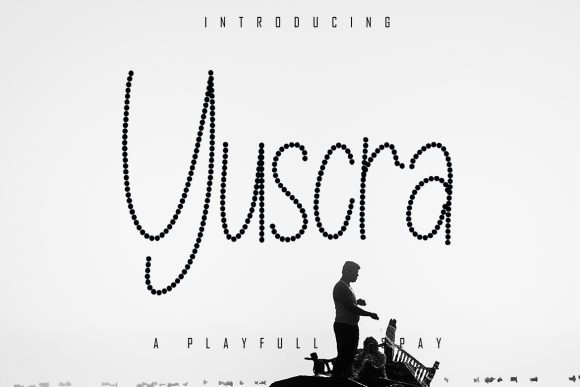
Unlike traditional typefaces where letters are formed with solid strokes, Yuscra uses a series of evenly spaced dots to construct each character. This gives the font a distinctive, almost hand-stamped appearance that feels both modern and whimsical. The dots aren't random—they're carefully placed to maintain legibility while creating a texture that draws the eye. It's the kind of detail that makes people pause and look closer, which is exactly what you want in branding, packaging, or editorial design.
The beauty of a dotted display font is its versatility across different mediums. On screen, the dots render crisply at larger sizes, making Yuscra ideal for headlines, banners, and hero text on websites. In print, the texture translates beautifully onto paper, cardboard, and even fabric, which opens up possibilities for merchandise, invitations, and packaging design. Whether you're working on digital products or physical materials, the font maintains its character and charm.
Where Yuscra Fits Into Real Design Work
Let's talk practical applications, because that's what matters when you're choosing a typeface for a project. If you're a small business owner launching a kids' clothing line, Yuscra could become the foundation of your brand identity—used consistently across your logo, hang tags, website headers, and social media posts. The dotted texture communicates playfulness and creativity without being childish, which is a fine line that many display fonts struggle to walk.
Content creators and bloggers often need fonts that help their work stand out in crowded feeds. Yuscra works particularly well for YouTube thumbnails, Instagram stories, Pinterest graphics, and blog post headers where you want to establish a recognizable visual style. Pair it with a clean sans serif for body text, and you've got a typographic system that feels cohesive and professional while still being approachable.
For designers working on packaging, the dotted texture adds visual interest that photographs well—important in an era where product packaging needs to look good both on shelves and in online listings. Think about coffee bags, snack packaging, beauty products, or artisan goods. Yuscra brings a handmade quality that suggests care and craftsmanship, which can help justify premium pricing and build brand recognition over time.
Pairing Yuscra With Other Typefaces
One of the most common questions about display fonts is how to pair them with other typefaces. Because Yuscra has such a strong personality, it works best as a headline or accent font rather than for long passages of body text. The dotted construction, while legible at larger sizes, can become harder to read in small blocks of running text.
For body copy, consider pairing Yuscra with a straightforward sans serif like Open Sans, Lato, or Montserrat. These neutral companions won't compete for attention but will provide the readability you need for longer content. If your project calls for more contrast, a simple serif font like Merriweather or Playfair Display can create an interesting dynamic between the playful dotted texture and more traditional letterforms.
The key is to let Yuscra do the heavy lifting in terms of personality while your secondary font handles the practical work of conveying detailed information. This approach keeps your designs feeling balanced and ensures that your typography supports rather than overwhelms your message.
Practical Tips for Working With Display Fonts
Before committing Yuscra to a final design, test it at the actual sizes where it will appear. A font that looks stunning at 72 points on your monitor might feel different at 24 points on a printed flyer or 18 points on a mobile screen. Spend time previewing your layouts in context—mock up business cards, social media posts, or website headers to see how the dotted texture reads at various scales.
Color choice matters significantly with textured fonts. Yuscra's dots create subtle negative space within each letter, so the font tends to look best with solid, high-contrast colors. A deep navy on white, coral on cream, or forest green on light gray will let the dotted detail shine. Avoid overly busy backgrounds or gradient fills that might muddy the texture and reduce legibility.
Spacing is another consideration. Display fonts with distinctive textures often benefit from slightly looser letter spacing than you might use with conventional typefaces. Adding just a bit of tracking can help each dot register individually rather than blurring into a visual mass, especially at smaller sizes. Experiment with spacing adjustments to find the sweet spot where the texture reads clearly without feeling too airy.
Considering Licensing for Commercial Projects
If you're planning to use Yuscra for commercial work—whether that's client projects, products for sale, or branded materials for your business—make sure you understand the licensing terms. Most premium fonts come with specific licenses that cover different use cases, from desktop and web use to embedding in apps or digital products. Review the license details before purchasing to ensure the font covers your intended applications.
Investing in a properly licensed creative font protects you legally and supports the designers who create these typefaces. It's a small cost that brings significant value to your design toolkit, especially when you consider how much a distinctive typeface can contribute to brand recognition and visual consistency across all your materials.
Building a Cohesive Visual Identity
Typography is one of the most powerful tools for creating brand recognition, and a distinctive font like Yuscra can become a signature element that people associate with your work. When used consistently across your website, social media, packaging, and print materials, a unique typeface helps your audience recognize your brand instantly—even before they read a single word.
The key is consistency. Choose Yuscra for specific applications—maybe all your headlines, product names, or call-to-action text—and stick with that system across every touchpoint. Over time, the dotted texture becomes part of your brand's visual language, reinforcing the personality and values you want to communicate. Whether your audience encounters your brand on Instagram, in their mailbox, or on a store shelf, that consistent typographic choice ties everything together into a cohesive, professional presentation.