Unicorn School: A Font That Balances Playful Charm with Professional Polish
Finding a typeface that feels both distinctive and usable can feel like a treasure hunt. You want something with personality—something that doesn't blend into the background—but it also needs to work across different mediums without sacrificing clarity. That's the sweet spot where Unicorn School lives. This bold yet friendly outlined display font strikes a balance that makes it surprisingly versatile for a wide range of creative and commercial projects.
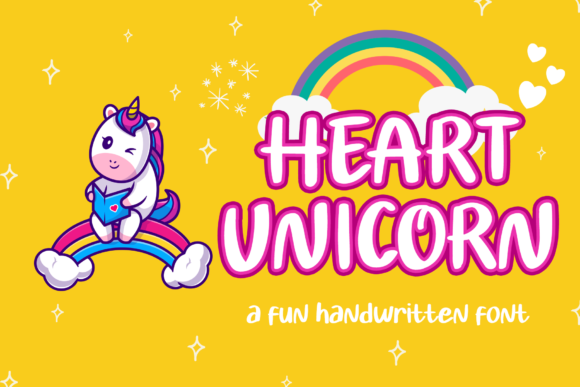
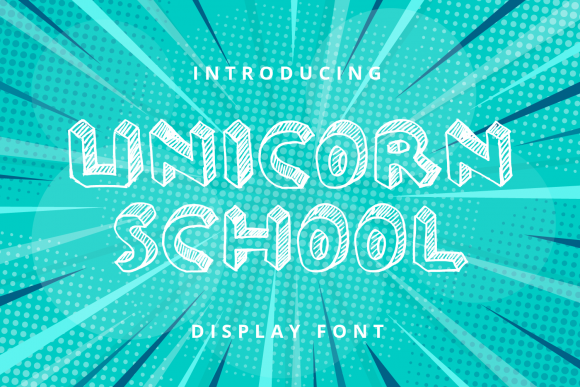
At first glance, Unicorn School catches your eye with its outlined letterforms. The characters have a hand-drawn, slightly whimsical quality that feels approachable rather than stiff. But don't let the playful name fool you into thinking this font is limited to children's projects. Its clean outlines and well-proportioned letterforms give it enough structure to work in professional contexts, especially when you need to inject some warmth or creativity into your visual communication.
Where This Typeface Truly Shines
The real test of any display font is how many places you can actually use it without it feeling forced. Unicorn School passes that test with flying colors. Consider how it works across these different applications:
Branding and Logo Design: If you're building a brand identity for a creative business, a boutique, a lifestyle blog, or any venture that wants to feel approachable and modern, this font gives your logo instant character. The outlined style creates visual interest without being overwhelming, which means it pairs well with simpler sans serif fonts for body text. Think of a craft bakery, a children's clothing line, or a creative coaching business—places where you want to feel friendly but still credible.
Packaging Design: Product packaging needs to stand out on a shelf or in an online listing. Unicorn School's bold outlines make product names pop, especially when set against solid or textured backgrounds. The font works particularly well for artisan products, specialty foods, beauty items, and handmade goods where the packaging needs to communicate both quality and personality.
Social Media Graphics: Creating scroll-stopping content is half the battle on platforms like Instagram, Pinterest, and TikTok. This typeface translates beautifully to digital formats. Use it for quote graphics, promotional announcements, story highlights, or branded templates. The outlined style creates a distinctive look that helps your content feel cohesive across posts, which strengthens your visual brand recognition over time.
Web Design and Blogs: While display fonts aren't typically used for long-form body copy, Unicorn School works beautifully for headings, navigation accents, hero sections, and featured content callouts on websites. Bloggers and content creators can use it to give their site a signature look that readers associate with their brand. Just be mindful of pairing it with a highly readable serif or sans serif font for paragraphs.
Print Materials and Merchandise: From posters and flyers to tote bags, mugs, and t-shirts, this font's outlined structure reproduces well across different printing methods. The bold letterforms maintain their impact whether they're printed large on a poster or scaled down on a business card. For merchandise especially, the playful-yet-polished aesthetic appeals to a broad audience.
Invitations and Editorial Layouts: Event invitations, greeting cards, magazine headers, and editorial spreads all benefit from typefaces that feel special without being hard to read. Unicorn School brings a celebratory, creative energy to invitations for birthdays, launches, and celebrations. In editorial contexts, it works as a striking headline font that draws readers into the content.
Digital Products and Marketing Assets: If you sell digital downloads, courses, worksheets, or lead magnets, using a consistent creative font across your materials reinforces your brand. Unicorn School can become part of your visual signature, making your digital products instantly recognizable to your audience.
Choosing the Right Font for Your Project Goals
Not every project calls for the same typographic approach. Before selecting any font—including Unicorn School—it's worth taking a moment to think about what you're trying to communicate. Ask yourself a few practical questions:
- What's the mood? If your project needs to feel energetic, creative, or approachable, a display font with personality is a strong choice. If it needs to feel formal or authoritative, you might pair Unicorn School with a more restrained typeface rather than using it as the primary font.
- Who's the audience? A younger demographic or creative community might respond well to the playful outlined style. A corporate audience might appreciate it as an accent rather than a headline.
- Where will it appear? Consider the medium. A font that looks stunning on a poster might need adjustments for screen readability at smaller sizes.
- What other fonts will it work with? Testing font pairings is essential. Unicorn School tends to pair well with clean sans serif fonts and simple serif fonts that don't compete for attention.
The key is matching your typography to your project's goals rather than choosing a font simply because it looks interesting in isolation. A typeface should serve the message, not overshadow it.
Readability, Pairings, and Practical Considerations
One of the most common mistakes with display fonts is using them at sizes or in contexts where readability suffers. Unicorn School's outlined design means it reads best at medium to larger sizes. For headlines, subheadings, and featured text, it delivers strong visual impact. For body copy or small text, switch to a complementary serif or sans serif font that prioritizes legibility.
When testing font pairings, try combining Unicorn School with a modern sans serif like Montserrat, Lato, or Poppins for a clean, contemporary feel. If your brand leans more classic, pairing it with a simple serif like Lora or Merriweather creates an interesting contrast between playful and refined. The goal is to create hierarchy—your display font draws attention, while your supporting font carries the detailed information.
Pay attention to spacing, weight, and color as well. Outlined fonts can lose impact if set against busy backgrounds or in low-contrast color combinations. Give the letters room to breathe with generous letter-spacing, and make sure there's enough contrast between the font and its background for easy reading.
Licensing and Making the Most of Your Investment
If you're considering Unicorn School for commercial work—client projects, products for sale, or business branding—make sure you understand the licensing terms. Most premium fonts come with specific licenses that outline how the font can be used. Some licenses cover desktop use, while others include web fonts, app embedding, or extended commercial use. Reading the license agreement before purchasing saves headaches later.
Many font packages also include multiple styles or weights. Review what's included before you start designing. You might find alternate characters, additional weights, or stylistic variations that expand your creative options even further. Having access to these variations means you can create more nuanced designs without needing to purchase additional typefaces.
Ultimately, the best font for your project is one that aligns with your visual goals, works well in your specific context, and resonates with your intended audience. Unicorn School's flexible style makes it a strong candidate for designers, small business owners, content creators, and anyone who wants their typography to feel distinctive without being impractical. Its outlined, friendly character opens up creative possibilities across branding, packaging, digital content, print materials, and beyond. The only real limit is how far you're willing to push your imagination.